Independent Living Services (ILS)
- NaturallyMe TeeBrown
- Nov 10, 2025
- 2 min read

Updated: May 15
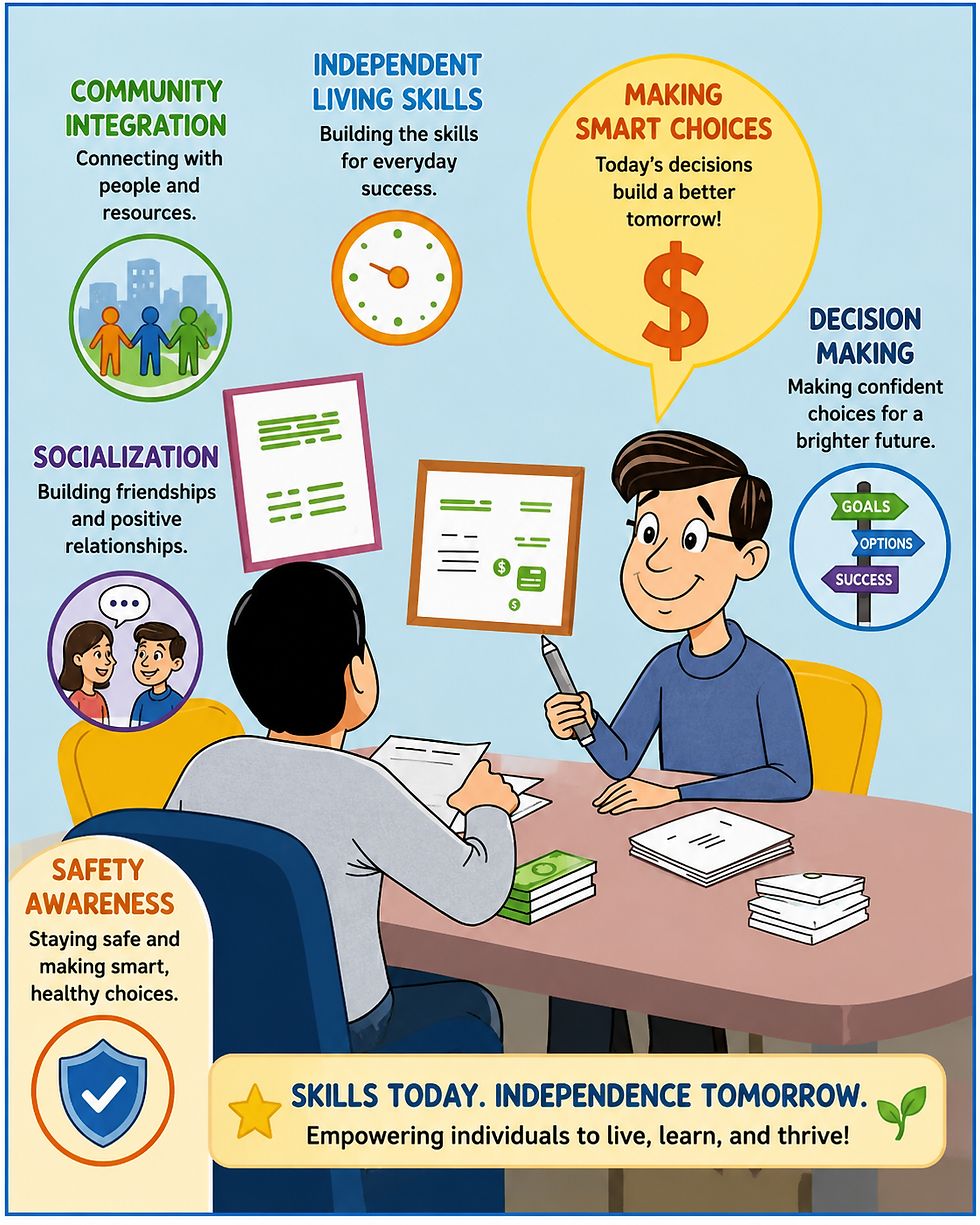
Teaching money managing and budget skills is a service you can get from ILS
Understanding the Importance of Support Services
Adults with disabilities often face barriers that affect their ability to live independently. These barriers can include difficulties with daily tasks, limited access to transportation, or challenges finding employment. Support services are designed to address these obstacles by providing tailored assistance that meets individual needs.
These services do more than just offer help—they promote autonomy and confidence. When adults with disabilities receive the right support, they can make choices about their lives, pursue goals, and contribute to society in meaningful ways.
Types of Services Available
Support services for adults with disabilities cover a broad spectrum. Here are some key categories:
1. Personal Care Assistance
Personal care services help with daily activities such as bathing, dressing, meal preparation, and medication management. These services can be provided in the home or in community settings. They allow individuals to maintain their health and hygiene while living independently.
2. Employment Support
Finding and keeping a job can be challenging for adults with disabilities. Employment support services offer job training, resume building, interview preparation, and workplace accommodations. Some programs also connect individuals with employers who value inclusive hiring practices.
3. Housing Assistance
Accessible and affordable housing is critical for independence. Housing services help individuals find suitable living arrangements, whether that means supported living, group homes, or independent apartments with modifications. These services often include help with budgeting and landlord communication.
4. Transportation Services
Reliable transportation is essential for accessing work, education, healthcare, and social activities. Many communities offer specialized transit options such as paratransit or volunteer driver programs. These services ensure adults with disabilities can travel safely and on their own schedule.
5. Educational and Skill-Building Programs
Learning new skills can open doors to greater independence. Educational programs may focus on literacy, technology use, financial management, or social skills. These programs often take place in community centers or through online platforms.
6. Health and Wellness Support
Maintaining physical and mental health is a foundation for independence. Services include physical therapy, counseling, nutrition guidance, and wellness coaching. These supports help individuals manage chronic conditions and improve overall quality of life.
How Services Promote Independence
Support services do more than provide assistance—they build capacity. Here’s how:
Skill Development: Learning to manage daily tasks or use adaptive technology empowers individuals to take control of their lives.
Confidence Building: Success in work, education, or social settings boosts self-esteem.
Community Integration: Access to transportation and social programs helps adults with disabilities engage with others and avoid isolation.
Choice and Control: Personalized services respect individual preferences and goals, allowing people to make decisions about their care and lifestyle.


Comments